Bean Mash.

Beans are fantastic.  They are high in protein, almost fat-free… They are, in fact, ridiculously good for you.   But they can be a little dull to eat sometimes.  This recipe, for bean mash, is a perfect accompaniment almost any roasted, grilled or pan fried meat and also goes very well with salmon and it is a very far cry from dull.  It can be as simple or as jazzy as you like, depending on your tastes or the accompanying flavours.  I usually make it with lots of garlic and rosemary (I’ve actually adapted this recipe over time to make it as effortless as possible; now I don’t even chop the garlic, I just leave the cloves whole!), but you could add tomatoes, chilli, bay, anchovies, you could make it with chicken stock or vegetable stock, you could mash it or leave the beans whole or semi-mashed; it’s entirely up to you.

Here’s how you make it:

 IMG_2347

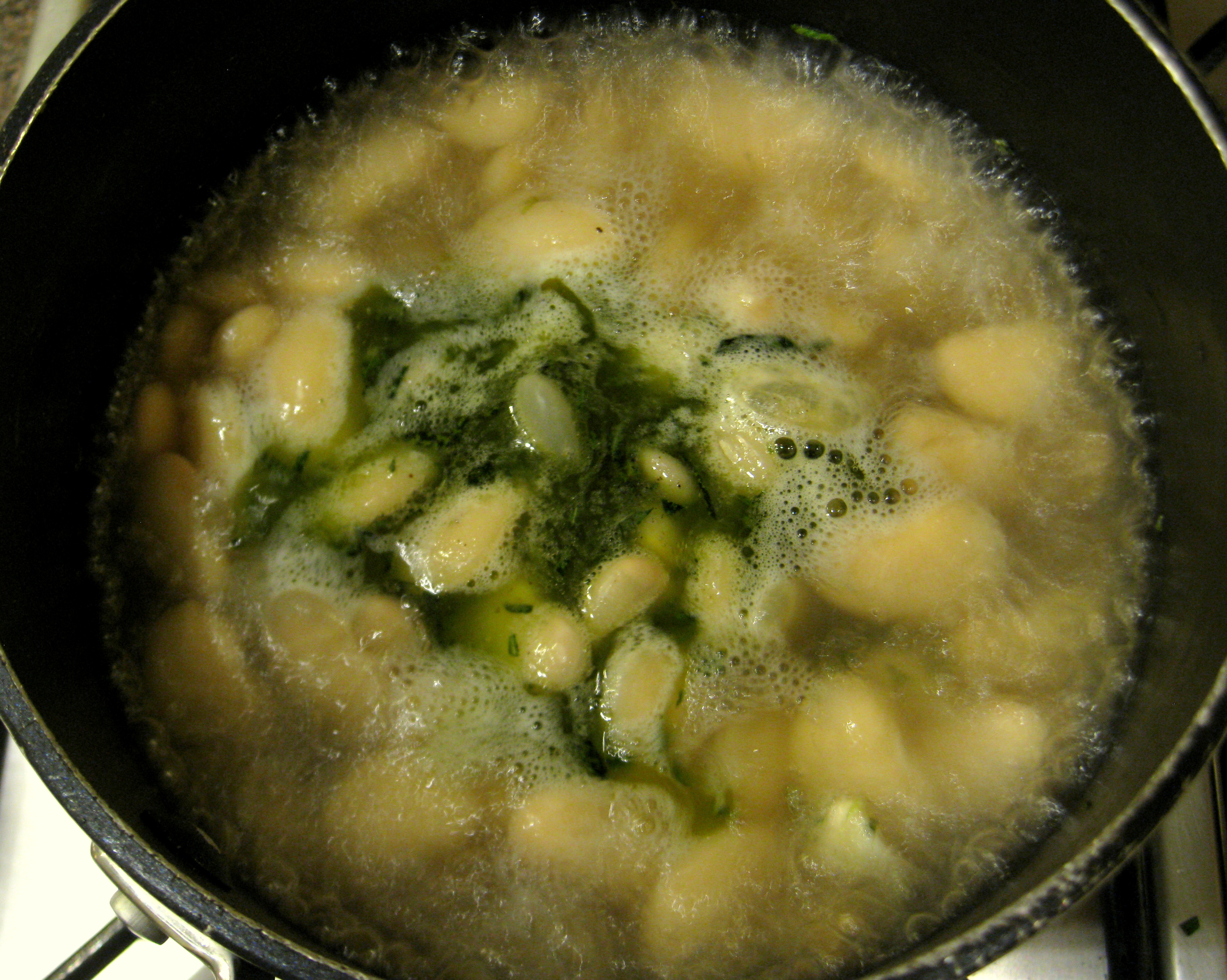
Start by heating some olive oil in a small sauce pan.  Then add whole garlic cloves (I use about three or four) and about three sprigs worth of chopped rosemary.  Then add one can of drained and well-rinsed butter beans (this will serve 2-3 people amply as a side dish).   Stir well.
IMG_2351

Now add enough gluten-free chicken or vegetable stock (I use the Knorr stock pots) to cover the beans.  Bring the beans to a boil, then lower the heat and simmer until the stock has reduced right down and the beans look brown and caramelized.  This can take up to half an hour depending on the amount of stock you added (quantities, in this recipe, are not so important, as you might have noticed).  You will end up with something that looks like this…IMG_2354
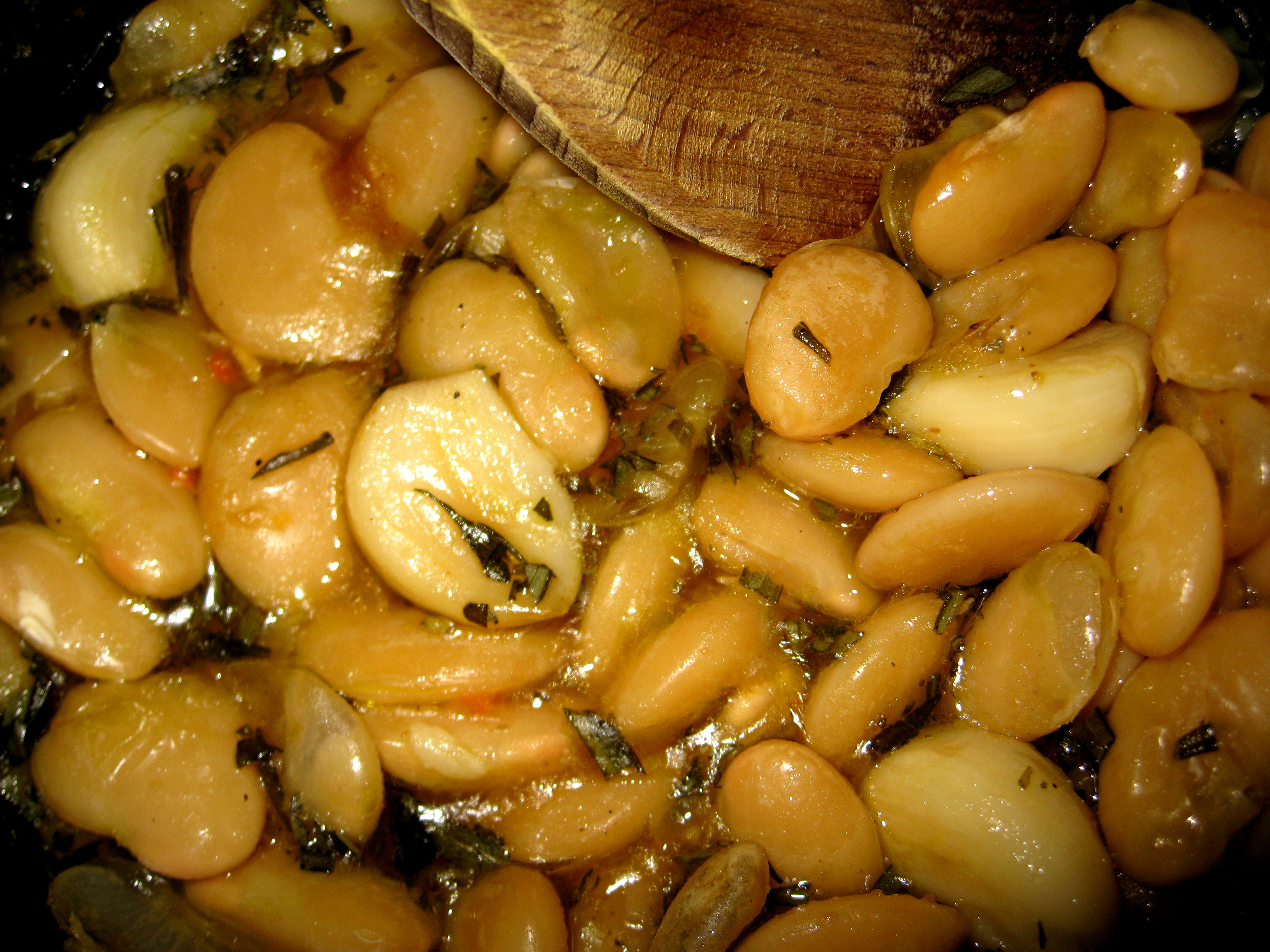
At this point you can turn the heat off and leave the beans until you are ready to mash them.  You can see the whole garlic cloves here: they will be mashed into the beans creating a lovely, mellow, garlicky flavour.

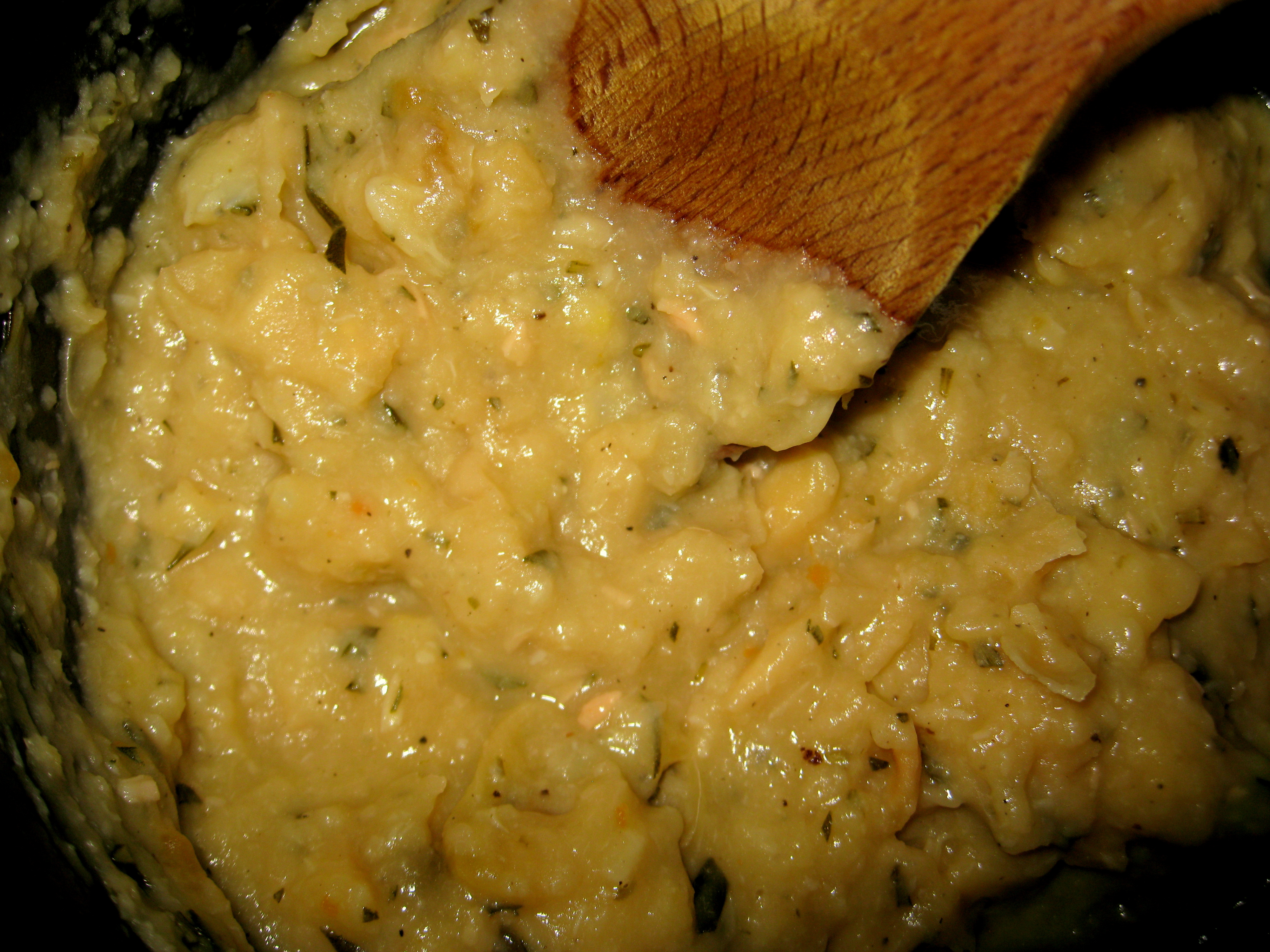
Next, mash the beans.
IMG_2355

Admittedly, this dish is not the most glamorous or visually appealing, but it tastes brilliant so who cares.  Taste the mash and adjust for seasoning; the stock, which has also been reduced, and therefore concentrated, can be very salty so don’t add salt until this point.  I rarely find I need it.
IMG_2358

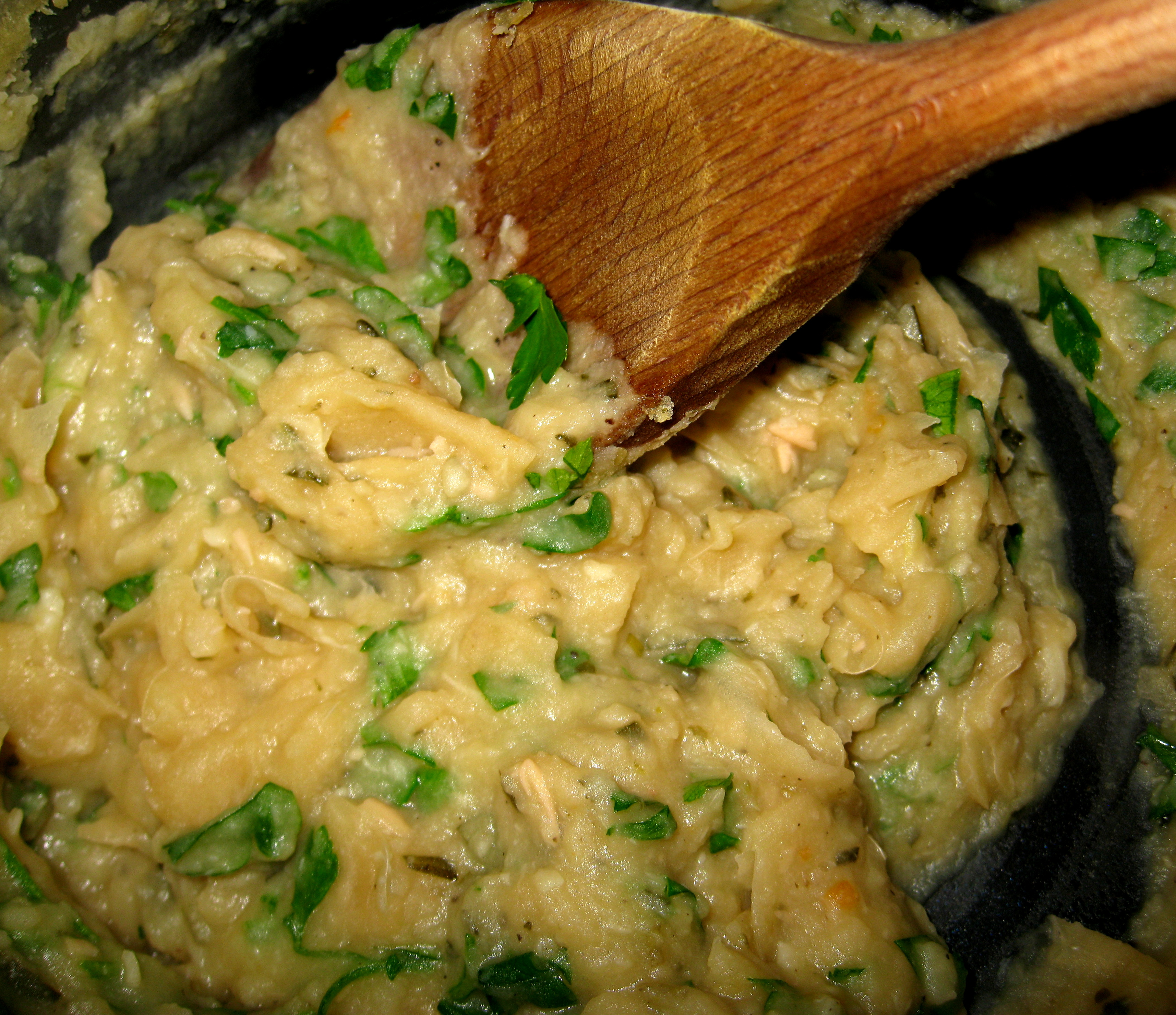
Finally add some chopped parsley and you’re ready to go.

This dish is simple and versatile and everyone I’ve ever made it for has wanted the recipe, and I bet you will too!
Courgette and Bacon Pasta… Without the Pasta.

Having just returned from a post-Christmas, pre-January-panic holiday in Paris, I’m feeling a little starved of vegetables.  They don’t really serve vegetables as part of a main dish there, nor can you order vegetables as a side dish (or maybe you can but it’s not on the menu), so after three days and four nights of eating omelettes, roast meat and mashed potatoes, Sebastian and I have been feeling a little heavy.  Inevitably, my diet whilst in Paris was less varied than it would be home; rather than trying to explain what coeliac disease is to every blank -faced waiter, I opted to use my chef training and general restaurant-going experience to make educated guesses about the potential wheat content of my potential dinner (I chose roasted meat instead of anything pan fried which might have been coated in flour first; chose the salmon tartar instead of the fish bisque, a jus rather than a thickened sauce, etc).  This went well, but it did mean that I ate a lot of salmon sashimi at lunch times (Paris: great place for sushi… Who knew?) and a lot of red meat at dinner and not much else.

I returned a couple of days ago, at dinner time. Of course, the fridge was devoid of food so I nipped out to the shops to buy something I could make quickly.  Before, I would’ve immediately opted for pasta, which is obviously off the menu now.  I was thinking wistfully about my courgette and bacon pasta dish as I stood in the grocers staring at kale, when it occurred to me that this celebrity vegetable, crisped in the oven, would be a great replacement for pasta, in this instance anyway.

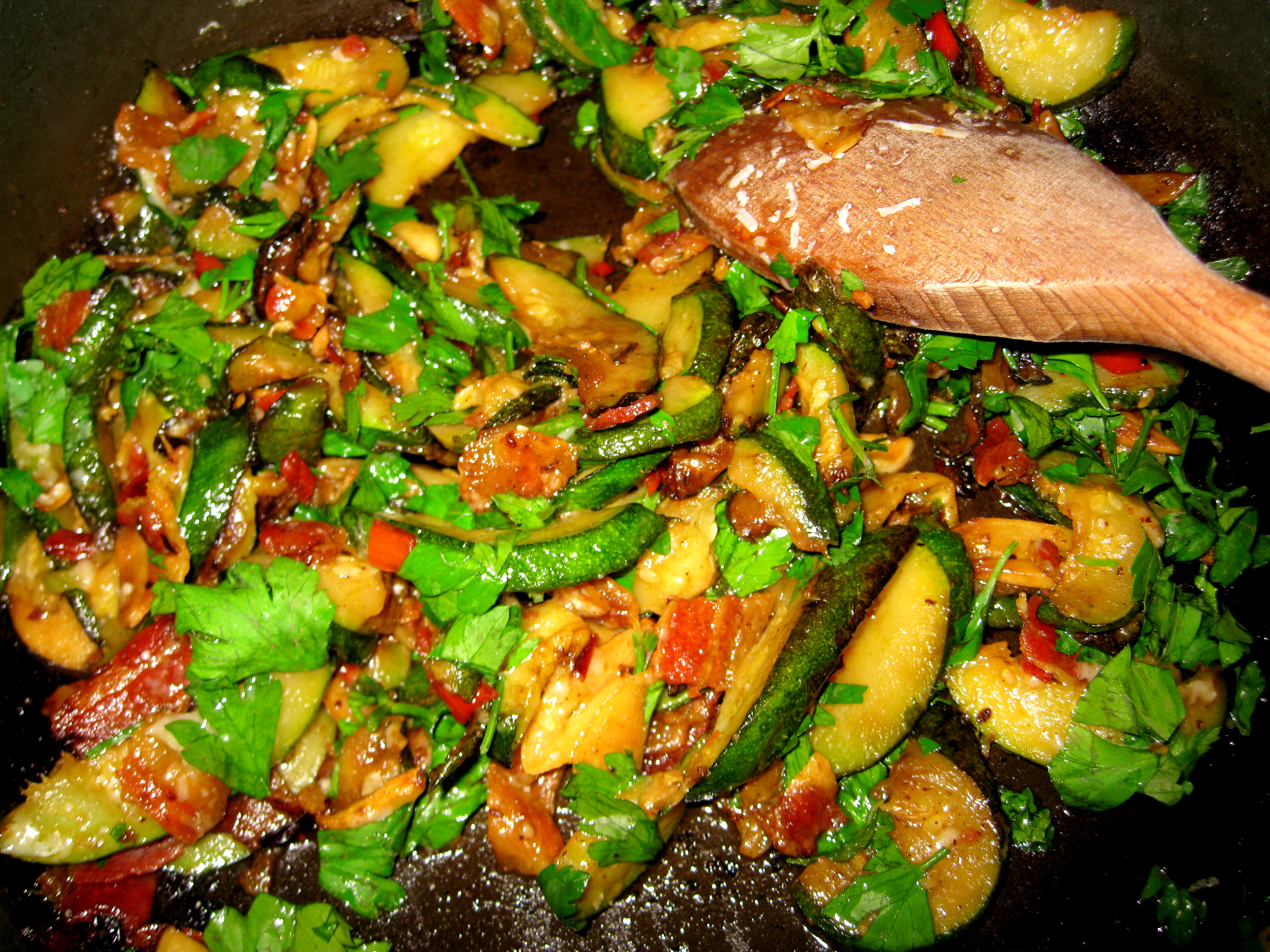
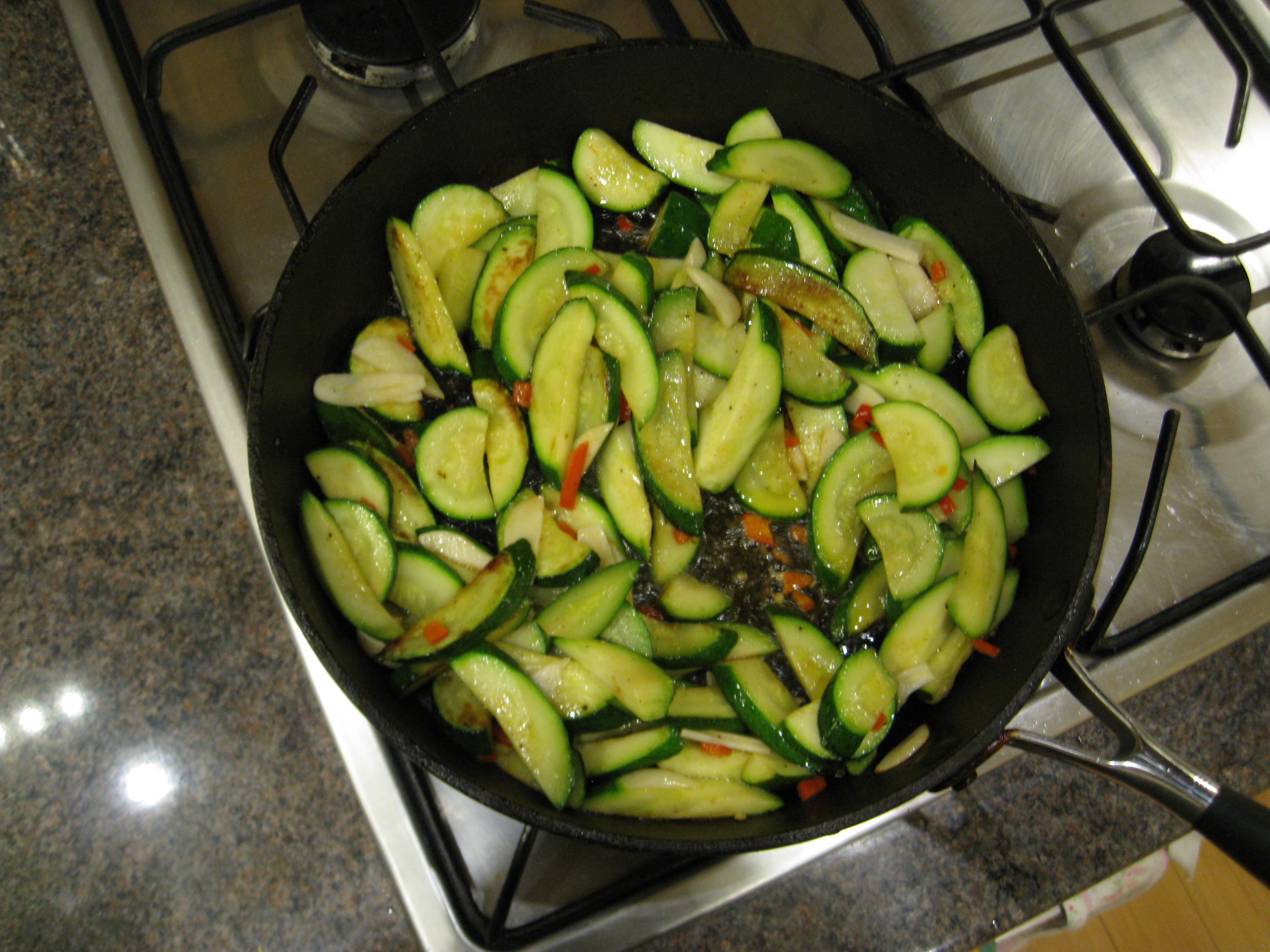
And I was right!  I’d bought extra courgettes (about four large ones) than I usually would but otherwise the quantities stayed exactly the same as they would have been were I making it as a pasta dish with actual pasta (so feel free to ignore the kale part and use corn pasta or whatever in it’s place).  First I fried six rashers of streaky bacon on a very low heat: this is how you get it to go really crispy.  Once they were dark brown and dramatically shrunken I drained the rashers on kitchen roll.  I turned up the heat on my frying pan a little and fried about four cloves of sliced garlic and half a chopped, fresh, red chilli (you can use more or less chilli depending on your tastes) until the garlic just started to colour.  Then I added my courgettes which I had washed, halved lengthways and sliced into semi-circles.

IMG_2309

I fired the courgettes on a high heat until they were cooked through and golden brown.

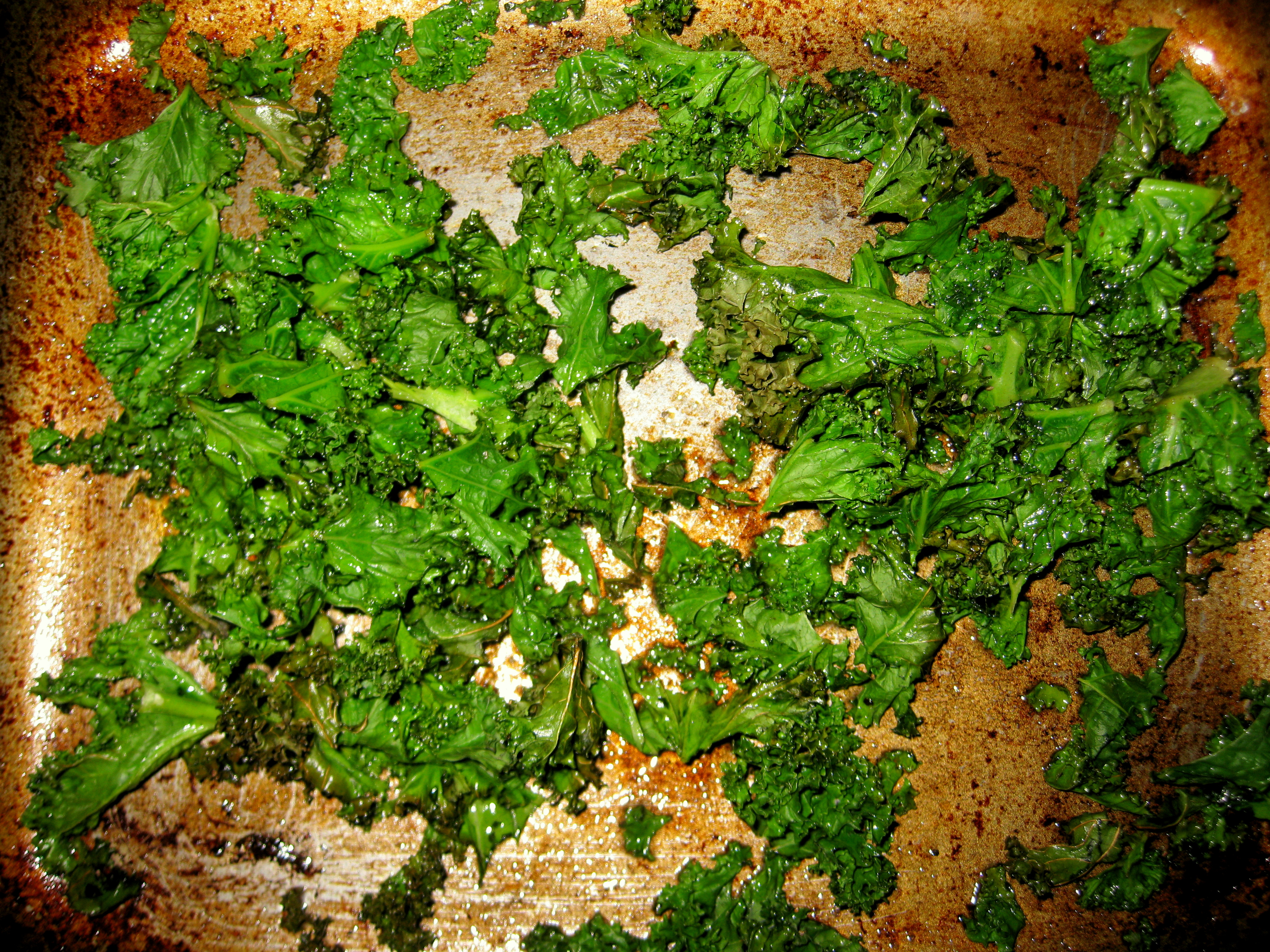
Then to the kale:  I spread the kale out evenly in a large roasting pan (if you pile it in, it was go soft, not crispy) and lightly drizzled olive oil over it with plenty of salt and pepper.  I cooked the kale for literally three minutes in an oven heated to 180°C.  And this is what I got…

IMG_2314

So that was it.  I added lots of freshly grated Parmesan and the crispy bacon to the courgettes and then topped my bowl of kale with the sauce.

IMG_2319

I’d made Sebastian pasta, which was once my favourite thing, but as he sat next to me, enjoying his supper, I wasn’t the slightest bit jealous!  Whatever, eat your pasta, I have kale crisps and they are excellent.

“Safe” restaurants.

Me and Sebastian have decided to go out to the cinema this afternoon and then for supper.  Obviously, I had to do some restaurant research.  What I’ve found, perhaps not surprisingly, is that chain restaurants are most likely (aside from, obviously dedicated gluten-free restaurants) to offer either gluten-free menus, options or allergy information pertaining to a wide variety of allergens.  The latter may sometimes be less useful than it sounds, especially when one is allergic to gluten: Byron, for example, lists almost all its dishes, from burgers to chips to dips , as containing gluten, except the “skinny burger”, which has no bun, and so has no gluten.  This begs the question, would all the burgers be gluten-free if I just asked for no bun? Or would the condiments, etc that come with the chicken burger or the chilli burger make it not gluten-free? Tricky.  I’d have to ask.  But the waiters may not know since it’s up to me, the customer and the coeliac, to check the allergy information online.  It is rather frustrating.

But, still, the fact that the information is there is reassuring.  Bill’s also has an allergens list; I am sadly restricted to about two things on the menu, but two is better than none I guess, and they’re both pretty yummy sounding things (grilled lamb with potato gratin or mushroom risotto).  The best are places like Carluccio’s, and Wahaca and Jamie’s Italian (if you can get the website to work properly) which all offer designated gluten-free menus, often as well as allergy information.

All this is very helpful and reassuring.  Obviously you can’t guarantee that, even if you ordered off the gluten-free menu, what you’re eating is completely gluten-free, but it’s probably as close to certain as you can get without cooking your food yourself.  And, as I don’t intend to become a hermit, bound to my kitchen forever for fear of wheat molecules, this will have to do!

Salmon and Lentils.

I’ve started cooking with lentils quite a lot lately.  In the interest of speed, I’ve been using pre-cooked lentils from a can (you can also get fancy puy lentils in sachets) which makes life really easy.  I always think of lentils as one of those ingredients that belong in dishes that have been cooked for a very long time, slowly; delicious, French bistro style dishes that I have neither the time nor the inclination to make myself (though I’m more than happy to eat them).  But canned lentils mean that you can have the flavours and experience of a slow-cooked stew almost instantly.  And lentils are perfect as part of a gluten-free diet: high in protein and low in fat they are both filling and comforting, and, despite the bad press they get, they can be really delicious.

Bored of my typical accompaniments to salmon and desperate for something that felt a bit carby (I am really starting to crave bread and spaghetti and pastry and cake…) I settled on lentils for supper.  My mum makes the best lentil dish, with red wine and balsamic vinegar, but I couldn’t remember how to make it, and I wanted something a bit lighter to go with my simply roasted salmon.

IMG_2327

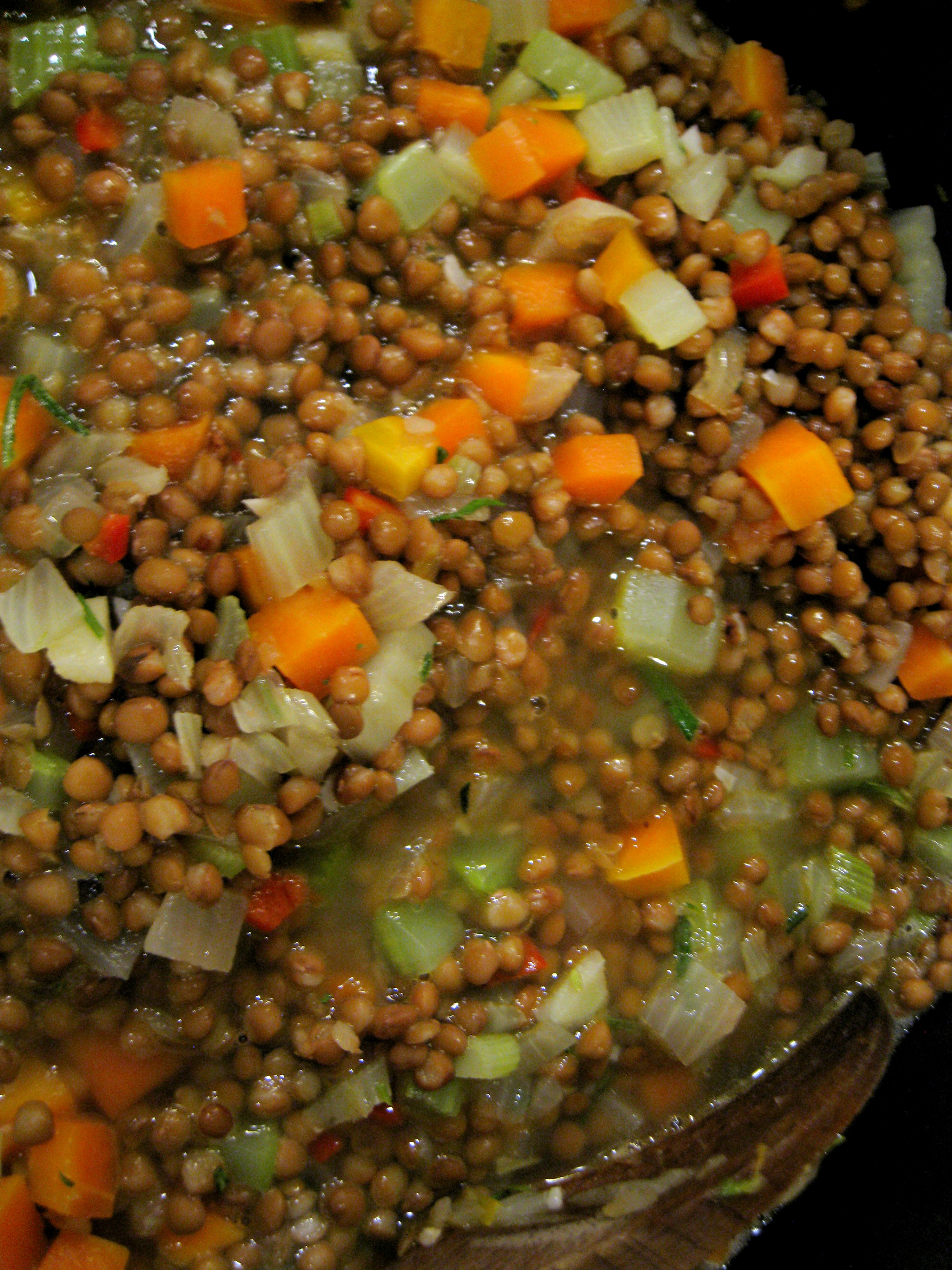
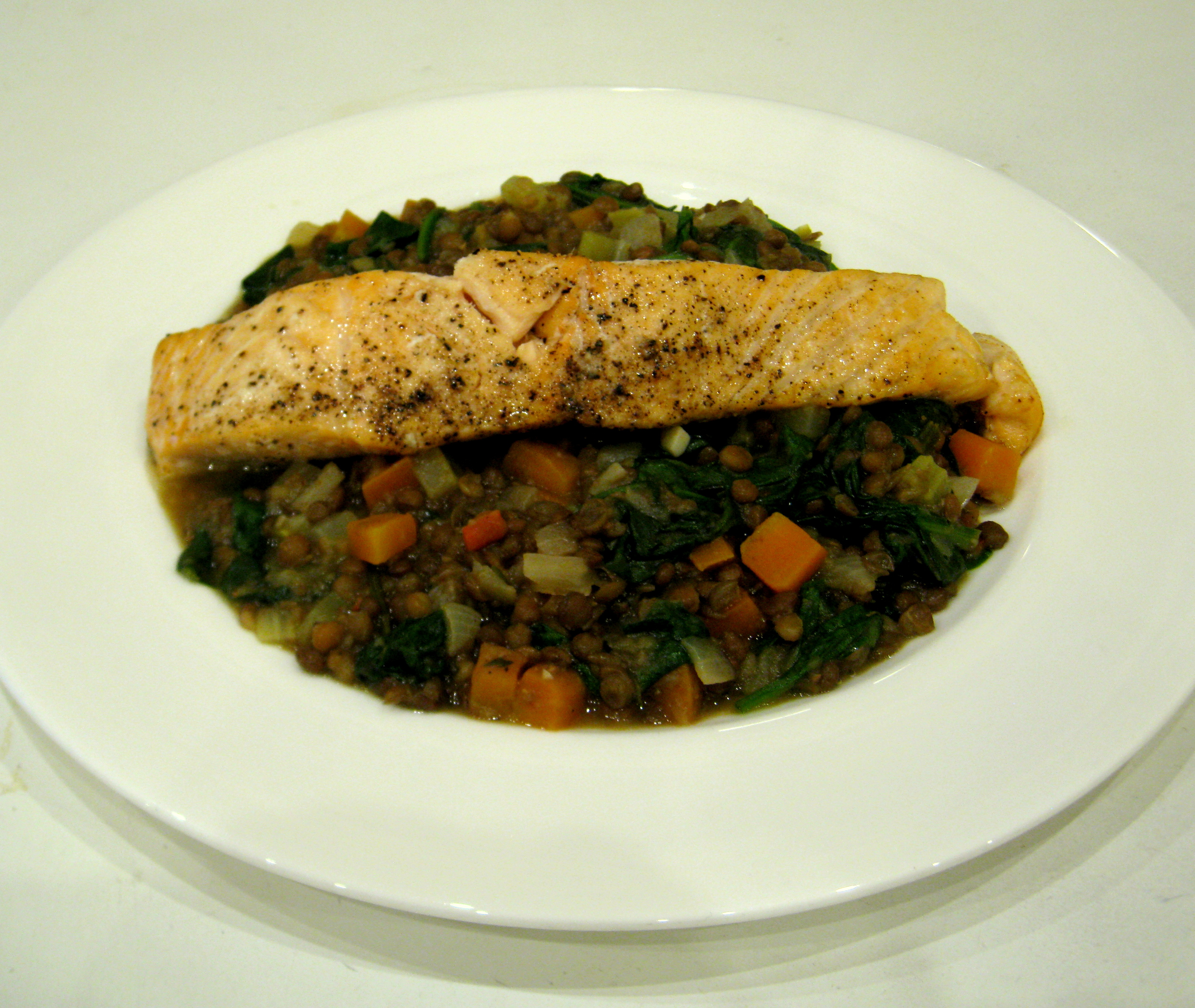
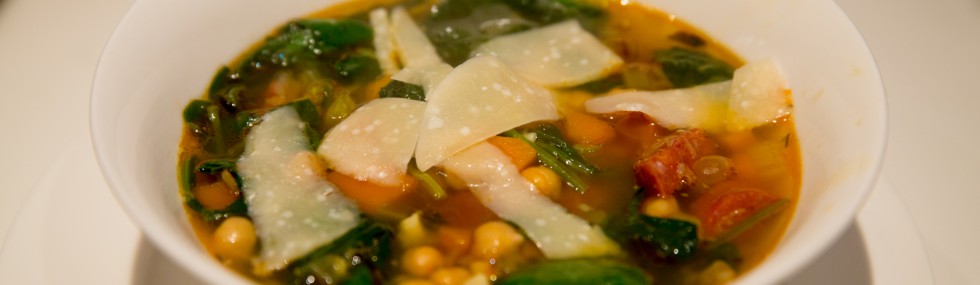
I started by dicing a carrot, two celery sticks, a white onion, garlic and half a fresh chilli.  Then I sauteed the veg in a casserole pan until they had started to soften.  Once I’d done that I added a generous splash of white wine and let the alcohol bubble off a little before adding two cans of drained and rinsed green lentils.  I added enough chicken stock to just cover the lentils, then brought the dish to the boil and simmered for about 15 minutes.  Finally, I added a whole bag of baby spinach: I put a lid on the pan and let the steam from the lentils wilt the spinach leaves.  One final stir and a check for seasoning and my supper was ready.  I served the lentils with some salmon, which I bought from my fishmonger (roasted for about 13 minutes at 180ºC fan) but the lentils would go nicely with lots of other kinds of fish, like monkfish or trout.

IMG_2333

This dish was simple and quick and definitely not dull!  Lump me in the the lentil-bashing vegetarians if you want to (although I certainly won’t be having nut roast for Christmas) but I think lentils may well be the rising stars of my coeliac suppers.

Travelling.

Me and my boyfriend, Seb, are planning a trip to Paris in January; it has occurred to me that this trip will no longer be the carefree, eat-where-we-may affair that it was when we went last year.  Last year we found a lovely cafe which served fresh croissants and baguettes for breakfast: well, that’s out.  And lunch could be whatever we fancied, sandwiches, pizza, whatever, just something quick.  Now I’m going to have to be much more organised.  The more I thought about it, the more panicked I became.  But I have just done a quick internet search, “gluten-free cafes Paris” and loads of stuff came up! One page had a printable gluten-free dining card explaining, in French, what Coeliac disease is (so you can ensure the waiter understands what you can and can’t eat) along with listings of restaurants and bakeries which have gluten-free food.  The dining card may be a bit lame and embarrassing, but still, it’s reassuring to have such a thing with you, just in case. Yelp also has plenty of listings and Google has a map plotting all (or some of) the gluten-free cafes in Paris.  Brilliant.  Panic over!

And actually, now I think about it, although maybe this trip won’t be quite as relaxed as last year’s, we’ll probably eat really, really well because I’ll have had to research everywhere we eat, not just the restaurants we go to for dinner.  I have never been able to select a good place to have lunch without first researching it; I just don’t have the instinct.  And so inevitably I end up picking the worst possible place which, in turn, results in much disappointment and anger and the exchange of bitter, snippy comments as Seb and I contemplate our grim-looking meals.  But, if I’ve got all the restaurants and cafes planned out in advance (boring though this planning process will be, admittedly; although it may require the purchasing of new stationary, the thought of which fills me with untold joy), lunchtime will be a much smoother operation.  Perhaps the holiday will be greatly improved.

Good, I feel much better now.  Better start browsing Muji for coloured pens…

Lunchtime Tuna Salad.

IMG_2297

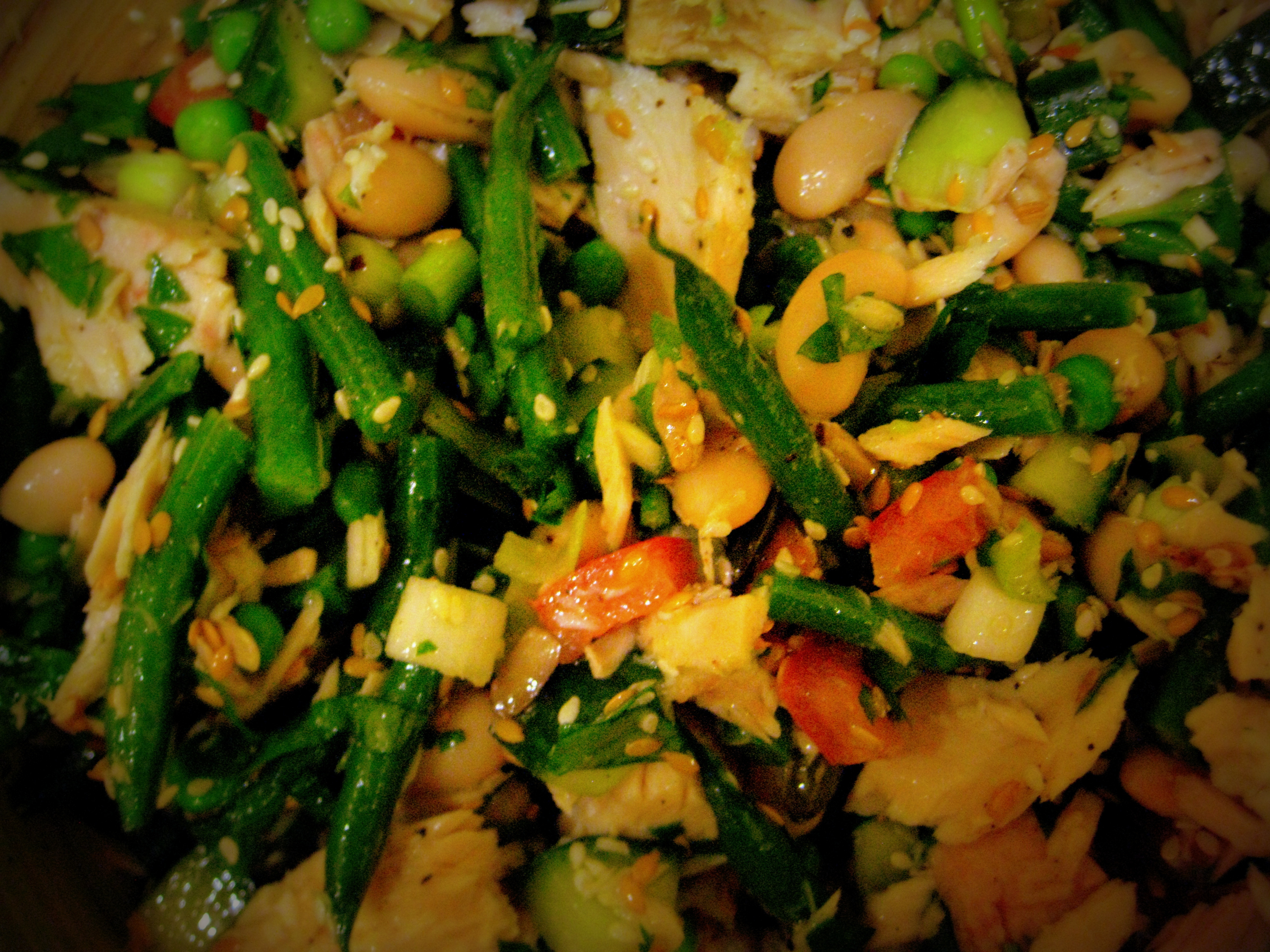
One of the issues with being coeliac, I’ve found, is what to do for a work day lunch.  Before I was diagnosed I wouldn’t even think about my lunch until I was about to make it; I’d just make some scrambled eggs on toast or some mashed avocado on toast or whatever on toast.  But, no more.  Now, every evening I must plan what I’m going to bring to work for lunch the next day.  Although I work in a cafe, I can’t risk making my food there because we prepare a lot of sandwiches and, or course, I do a lot of baking, so the risk of contaminating my food with wheat flour or bread would be too high.  Usually I bring in leftovers, which is simple enough, but what about those days when you’ve gone out for supper, got a takeaway or been to a friend’s house?  Whatever it is has to be filling, and keep me full for a while (being a hungry coeliac in a sandwich shop is a little like being lost at sea… water, water everywhere…) and I believe I’ve got just the thing: a simple, healthy, tuna and bean salad.

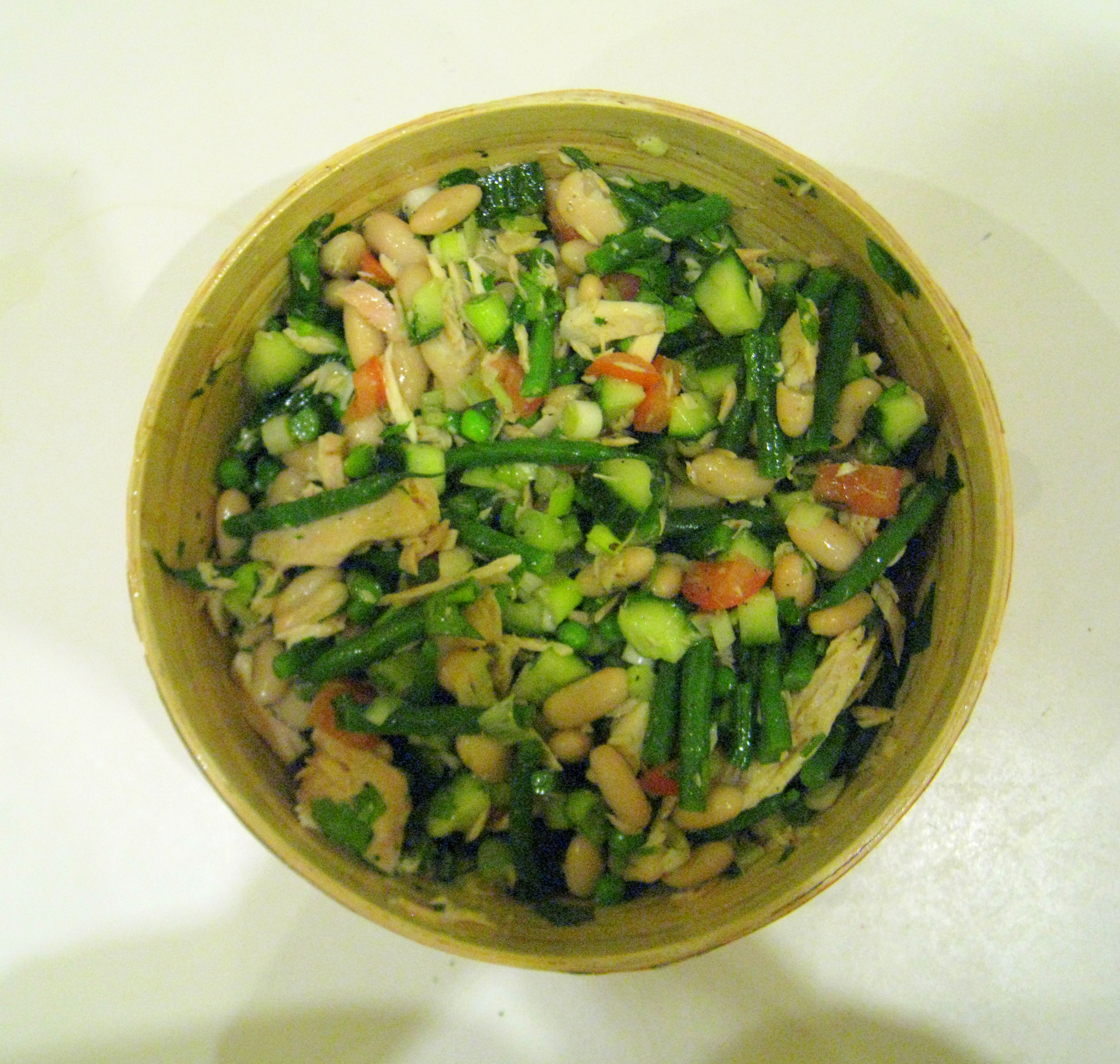
I started with some really nice canned tuna, not the kind that smells like cat food, and some cannellini beans, although you could use any kind of canned bean you like (butter beans, flageolet, kidney beans, etc).  After that it was really a matter of what I could find in the fridge that would be appropriate: I had some green beans, which I cut into thirds and boiled for about 3 minutes before draining and running under cold water, and some spring onions, a tomato and some cucumber.  I chopped up all the veg and mixed it up with the beans and tuna.  Finally, I added some chopped parsley, some defrosted peas, salt, pepper, garlic olive oil, lemon juice and a sprinkle of mixed seeds.  Job done.

This literally took me ten minutes.  And it made loads so now I have lunch for three days, easily, unless my boyfriend gets his hands on it.  That’s the other great thing about this sort of gluten-free cooking: it doesn’t feel gluten-free, like a gluten-free sandwich or gluten-free pasta would, so everyone in the house can enjoy it.  It is delicious, healthy and also happens not to contain wheat.  It certainly ticks all my boxes!

IMG_2303

Other Carbs.

IMG_2290

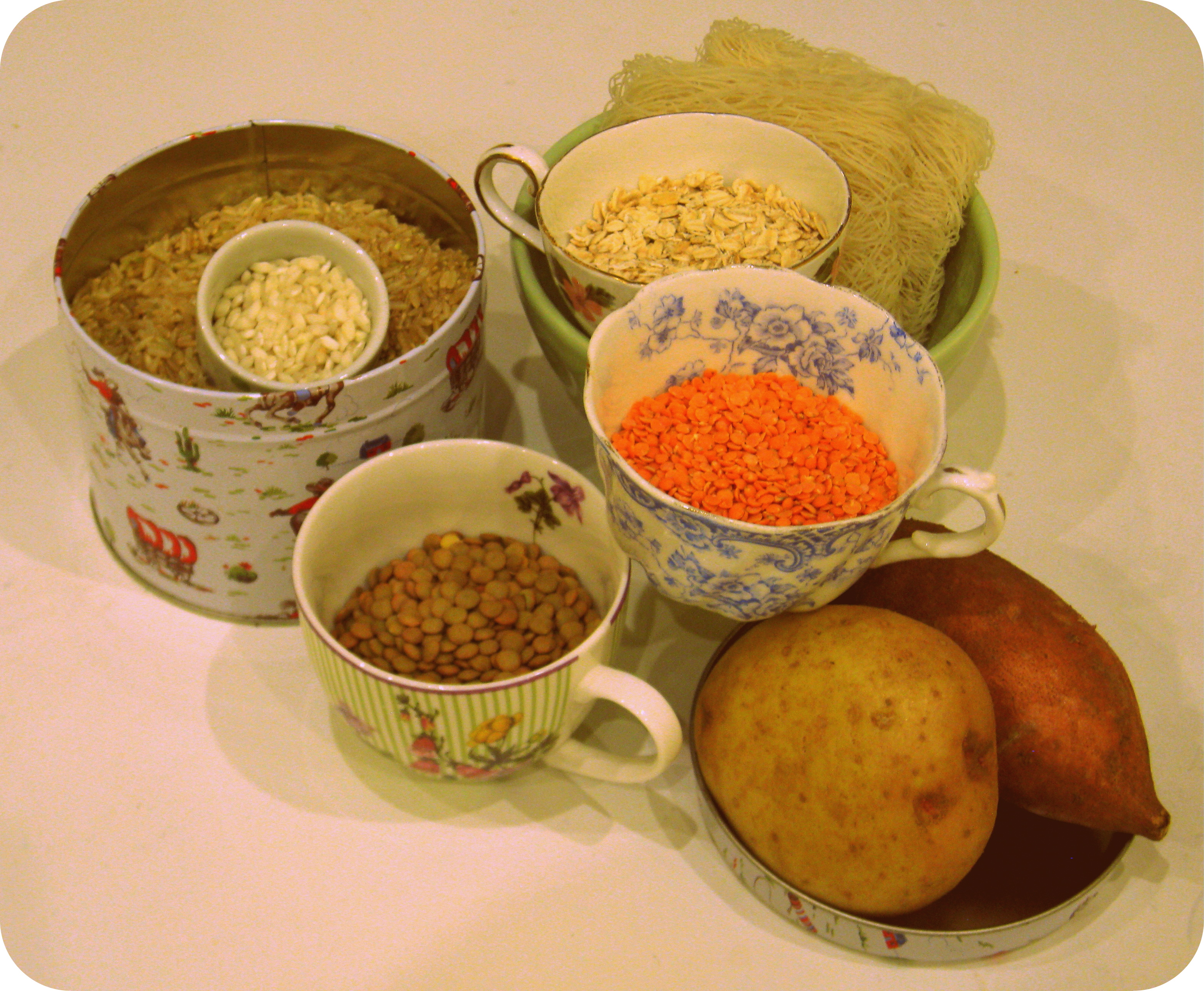
So I’ve been looking into alternative carbohydrates.  I love pasta and bread so cutting them out will be something of an ordeal but I’m trying to stay positive and remember that no pasta means more mash potato.  I never eat mash, but now I can eat it all the time (well, not all the time, obviously, but more than I used to).   Also, whilst I can never again have pasta or pizza (unless I have the gluten-free pastas or pizza bases which, I have been reliably told by a nutritionist, may as well be called “sugar that looks like pasta”) I can have risotto, one of my favourite things; really, all this just means that I will no longer be plagued with indecision when confronted with a menu over two pages long.  I’ll have so much free time! Maybe I’ll start a rock band.

There are so many alternatives to wheat that we coeliacs really have no reason at all to resort to the processed rubbish that is marketed as gluten-free bread is pasta.  That stuff is so far far removed from being bread it may as well have gills and live in the sea.  For example, there’s potatoes, of course, but also sweet potatoes, which are delicious mashed or cut into wedges and baked.  And they cook much faster than regular potatoes so perfect for a speedy baked spud.  And of course, there’s rice, loads of rice, countless kinds of rice.  I’ve got some brown rice here and some risotto rice (I’m having fish risotto tonight) but there’s wild rice, red rice, jasmine rice, long-grain rice, the list goes on and on.  There’s also lentils, which are perfect in curries and soups and puy lentils go really well with salmon.

Oats are tricky.  I’ve been told to steer clear but there are gluten-free oats out there that have been protected from wheat contamination so you can still have porridge in the morning if you trust what the back of the box says.

In addition there’s also quinoa, buckwheat, beans, so many kinds of beans which also count of protein so they’re perfect for staying fuller for longer (try a salad with tuna and cannellini or kidney beans for lunch).  Anyway, you get the point.  There is absolutely no need to settle for pasta or bread that tastes like sweet corn or sponge when there are so many other ways of eating filling, satisfying, gluten-free meals.