Polenta.

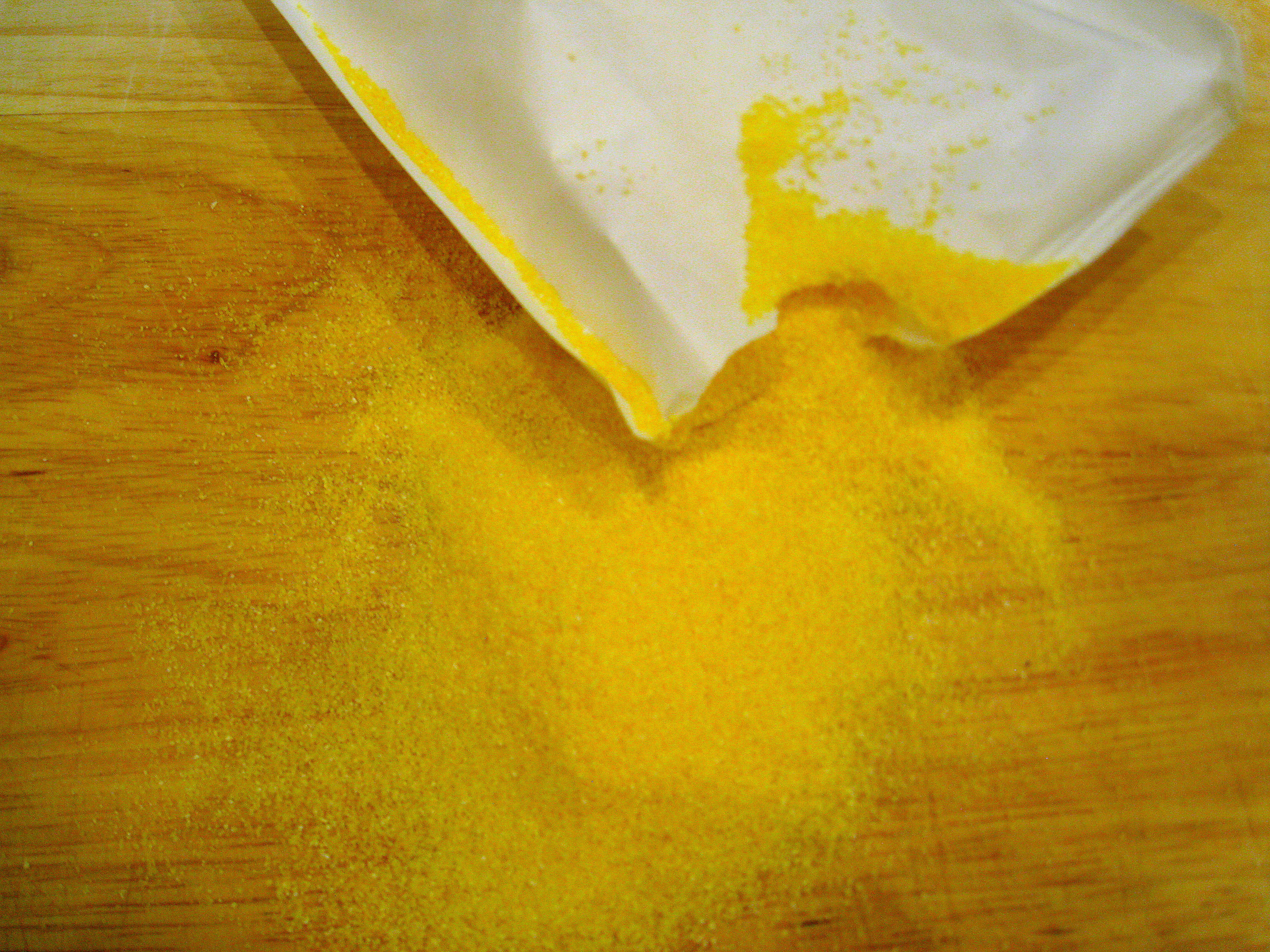
Polenta is an excellent gluten-free alternative to bread crumbs; it has a lot more flavour, too.

IMG_2436

Try butterflying a chicken breast (or bashing it with a rolling pin until it’s evenly flattened) before coating it in lightly beaten egg.  Then mix a few handfuls of fine polenta with some finely grated Parmesan cheese and plenty of chopped parsley (you could whizz the cheese and parsley in a food processor and then mix with the polenta).  Use this cheesy crumb to coat the chicken, before frying in olive oil for about 4 minutes a side, depending on how thin your chicken is.  The result is crunchy and golden and perfect with a simple salad and boiled new potatoes.

“Safe” restaurants.

Me and Sebastian have decided to go out to the cinema this afternoon and then for supper.  Obviously, I had to do some restaurant research.  What I’ve found, perhaps not surprisingly, is that chain restaurants are most likely (aside from, obviously dedicated gluten-free restaurants) to offer either gluten-free menus, options or allergy information pertaining to a wide variety of allergens.  The latter may sometimes be less useful than it sounds, especially when one is allergic to gluten: Byron, for example, lists almost all its dishes, from burgers to chips to dips , as containing gluten, except the “skinny burger”, which has no bun, and so has no gluten.  This begs the question, would all the burgers be gluten-free if I just asked for no bun? Or would the condiments, etc that come with the chicken burger or the chilli burger make it not gluten-free? Tricky.  I’d have to ask.  But the waiters may not know since it’s up to me, the customer and the coeliac, to check the allergy information online.  It is rather frustrating.

But, still, the fact that the information is there is reassuring.  Bill’s also has an allergens list; I am sadly restricted to about two things on the menu, but two is better than none I guess, and they’re both pretty yummy sounding things (grilled lamb with potato gratin or mushroom risotto).  The best are places like Carluccio’s, and Wahaca and Jamie’s Italian (if you can get the website to work properly) which all offer designated gluten-free menus, often as well as allergy information.

All this is very helpful and reassuring.  Obviously you can’t guarantee that, even if you ordered off the gluten-free menu, what you’re eating is completely gluten-free, but it’s probably as close to certain as you can get without cooking your food yourself.  And, as I don’t intend to become a hermit, bound to my kitchen forever for fear of wheat molecules, this will have to do!

Other Carbs.

IMG_2290

So I’ve been looking into alternative carbohydrates.  I love pasta and bread so cutting them out will be something of an ordeal but I’m trying to stay positive and remember that no pasta means more mash potato.  I never eat mash, but now I can eat it all the time (well, not all the time, obviously, but more than I used to).   Also, whilst I can never again have pasta or pizza (unless I have the gluten-free pastas or pizza bases which, I have been reliably told by a nutritionist, may as well be called “sugar that looks like pasta”) I can have risotto, one of my favourite things; really, all this just means that I will no longer be plagued with indecision when confronted with a menu over two pages long.  I’ll have so much free time! Maybe I’ll start a rock band.

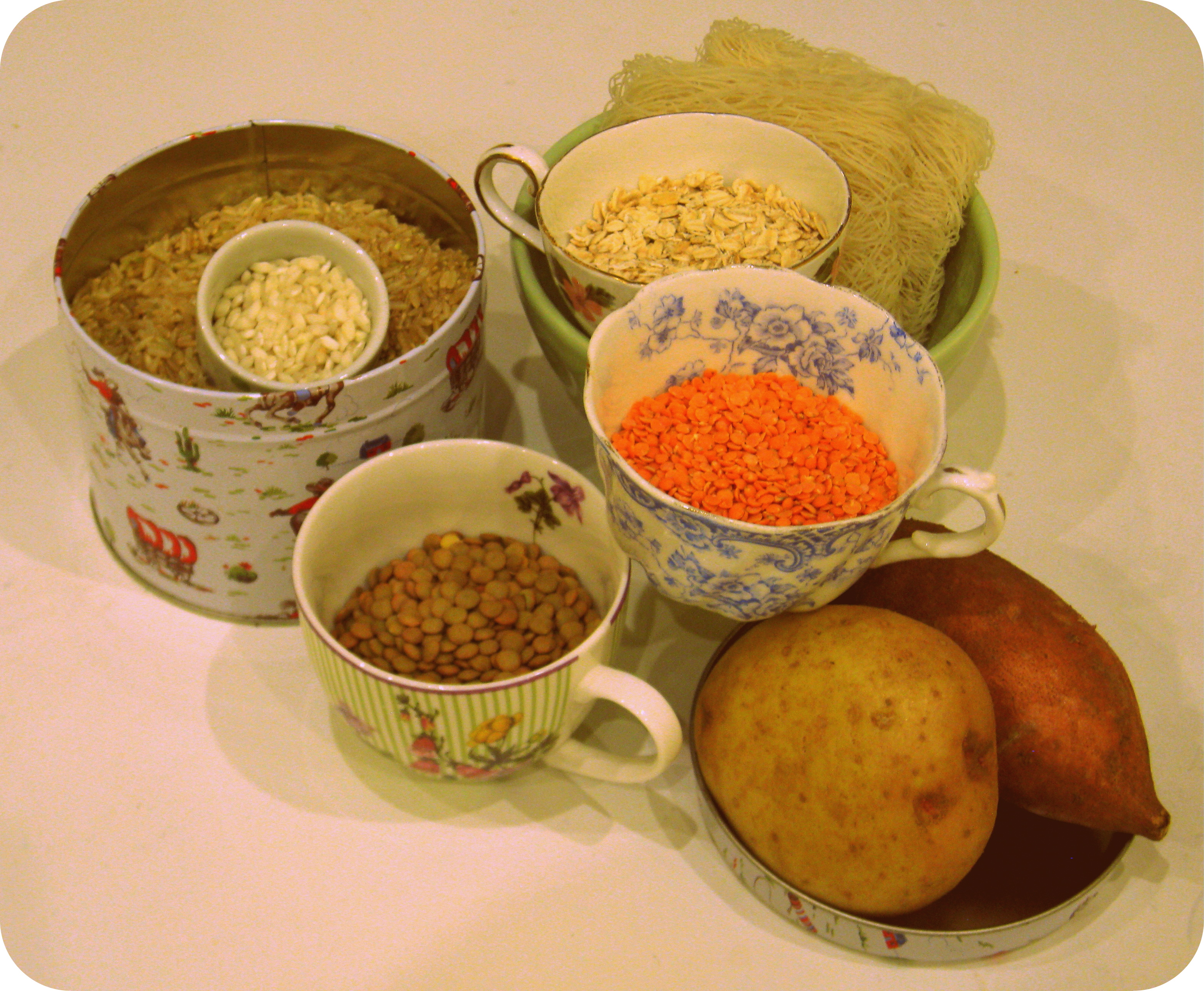
There are so many alternatives to wheat that we coeliacs really have no reason at all to resort to the processed rubbish that is marketed as gluten-free bread is pasta.  That stuff is so far far removed from being bread it may as well have gills and live in the sea.  For example, there’s potatoes, of course, but also sweet potatoes, which are delicious mashed or cut into wedges and baked.  And they cook much faster than regular potatoes so perfect for a speedy baked spud.  And of course, there’s rice, loads of rice, countless kinds of rice.  I’ve got some brown rice here and some risotto rice (I’m having fish risotto tonight) but there’s wild rice, red rice, jasmine rice, long-grain rice, the list goes on and on.  There’s also lentils, which are perfect in curries and soups and puy lentils go really well with salmon.

Oats are tricky.  I’ve been told to steer clear but there are gluten-free oats out there that have been protected from wheat contamination so you can still have porridge in the morning if you trust what the back of the box says.

In addition there’s also quinoa, buckwheat, beans, so many kinds of beans which also count of protein so they’re perfect for staying fuller for longer (try a salad with tuna and cannellini or kidney beans for lunch).  Anyway, you get the point.  There is absolutely no need to settle for pasta or bread that tastes like sweet corn or sponge when there are so many other ways of eating filling, satisfying, gluten-free meals.